 Historical Homes
Description
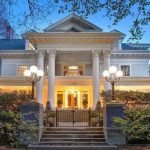
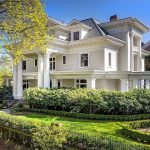
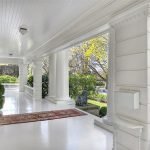
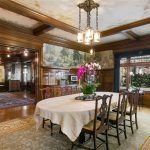
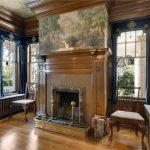
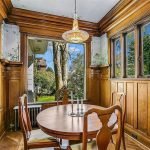
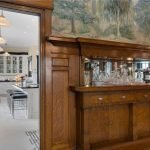
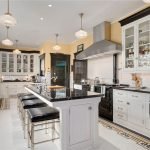
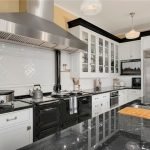
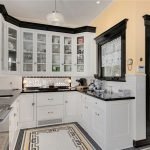
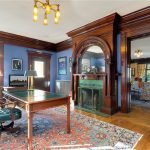
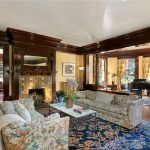
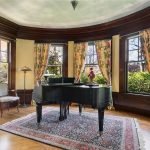
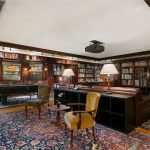
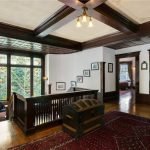
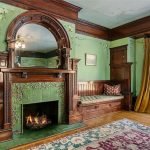
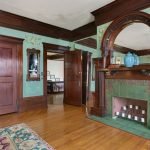
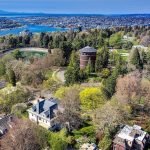
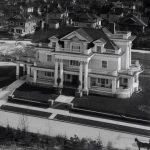
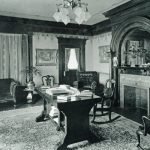
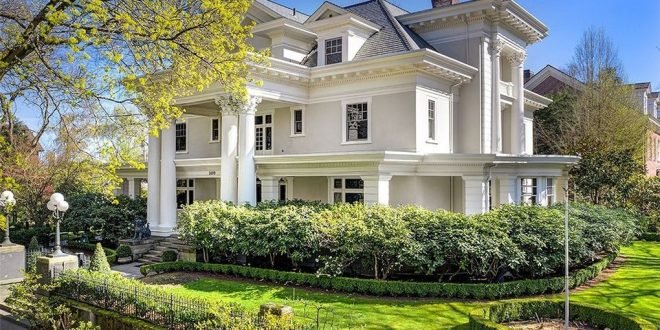
A 1909 Seattle Times article said of this house “It is a structure – of purely colonial architecture, the most truthful copy of the style in the city.” Frederick Sexton was both the architect and superintendant of construction. It is a massive white building, the largest residence in the district. The building construction, land, and landscaping cost $100,000. Technically it is a neoclassical design. The house faces Volunteer Park, and four Corinthian columns support a portico two stories high, emanating from the lower roof line, at the front of the house. A pediment rises above it. A lower portico, supported by rectangular columns, is one story tall and runs the width of the house. Additional one story porticos flank the sides of the house. The sides also are embellished with Corinthian columns, rising from the second floor to the third, with a balcony in between. The house has double hung windows, fine dentils lining the various cornices, and rectangular modillions, under the eaves, appearing as larger dentils. The balusters surrounding the various balconies and porches have been removed, but the house retains its original imposing character. It is already designated as a Seattle City Landmark.
History
This house has a colorful past, with the first owner being sent to prison for a notable case of stock fraud just about a year after moving into the house, and the second owner being a purported Russian baron who started a new religion / philosophy called The Lightbearers.
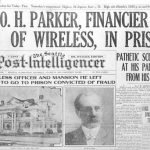
George H. Parker, the first owner of the house, was born in Canada around 1858. He immigrated to the U.S. in 1870, became a naturalized citizen, and married a lady named Evvie from Iowa. They lived in Colorado for a time where he befriended others that would also become part of the stock fraud, and then moved to Seattle around 1907, with no notable affluence at the time. George H. Parker took on the role of fiscal agent for United Wireless and Telegraph for the region west of the Mississippi. United Wireless sold shares in an enterprise promising to build a radio infrastructure throughout the country. There were only two problems. Firstly, they didn’t own patents that gave them the rights to this technology, which Marconi had developed earlier in Italy. Secondly, for each $1000 that was invested in the company, Parker personally kept $200, some friends in Denver received $180, the state agent received $220, the company officers in New York pocketed $200, leaving only a measly $200 to be invested in building wireless infrastructure.
Given this scheme, and the tremendous excitement about the limitless potential of wireless, one can easily understand how Parker cleared over one million dollars on this fraud. He spent some of this money on his home ($100,000 in 1909 dollars), the nearby Parker apartment house (approximately $100,000 as well), stock in the Arctic Club building, a significant art collection, several cars, and various other investments. This fraud was described as the first of its kind in the history of the U.S. (but unfortunately was not the last). In 1911, Parker was sentenced to spend two years in a New York federal prison. The company however did deploy some radio towers, which assisted coastal and trans-pacific vessels at the time.
Eugene Fersen bought this house several decades later, around 1939-1940. He was born on November 18, 1873 in St. Petersburg Russia. According to one source, he was the oldest son of Marie Alexandrovna, the Grand Duchess of Russia, and on his father’s side he was a descendent of Count Axel Fersen. According to another source, he was the only acknowledged out-of-wedlock son of Czar Nicholas II. Fersen said that his family castles were taken by the Bolsheviks during the Russian Revolution. He came to the U.S. in 1901-1902, and formed a philosophic / religious organization called The Lightbearers, which still exists today. Two of his books, Science of Being and Is there a God? describe his philosophy. According to a neighbor, Fersen said that he chose this house because, “We’ve always lived in houses fronting parks. London, Paris, St. Petersburg.” He died on April 24, 1956, leaving his house first to his sister, and then to revert to The Lightbearers upon her death. The Lightbearers operated their Science of Being College out of the house into the 1980’s, at which point the house was purchased and converted back into a private residence.